
How to go beyond the intermediate plateau in Spanish
Most Spanish learners make steady progress in the beginning, only to feel like they've suddenly stopped improving. This guide explains why that happens and how to move past it with the right kind of practice.

Start with clear, scripted content you can almost follow, then build up from there.
Drill the grammar you already understand until you can use it without thinking.
Speak or write a few sentences daily so passive knowledge becomes active.
Going beyond the plateau
Most learners eventually reach the point where understanding Spanish is no longer the biggest challenge. They can follow conversations well enough, but speaking still feels slow and listening requires constant concentration.
This happens because recognising Spanish and producing Spanish are different skills. The problem is no longer learning the language. It's making the language you already know automatic.
“Understanding Spanish and using Spanish are two different skills.
”
Don't expect one app to make you fluent
No app will make you fluent. Ours included. As the team behind Modo, we'd never claim it's all you need. Fluency comes from combining different types of practice over a long period of time.
1. Listen to Spanish you can almost understand
Don't start with fast, unscripted podcasts. Native conversations jump between topics, interrupt each other, and assume a lot of background knowledge.
Start with scripted content instead. Videos that are planned and written in advance tend to be much easier to follow because the speaker has a clear structure, speaks more deliberately, and avoids constantly interrupting themselves or changing direction.
Some of our favourite channels for intermediate learners:


Stick with one channel for a few videos. Your brain adapts to a speaker's voice and accent, and understanding gets noticeably easier.
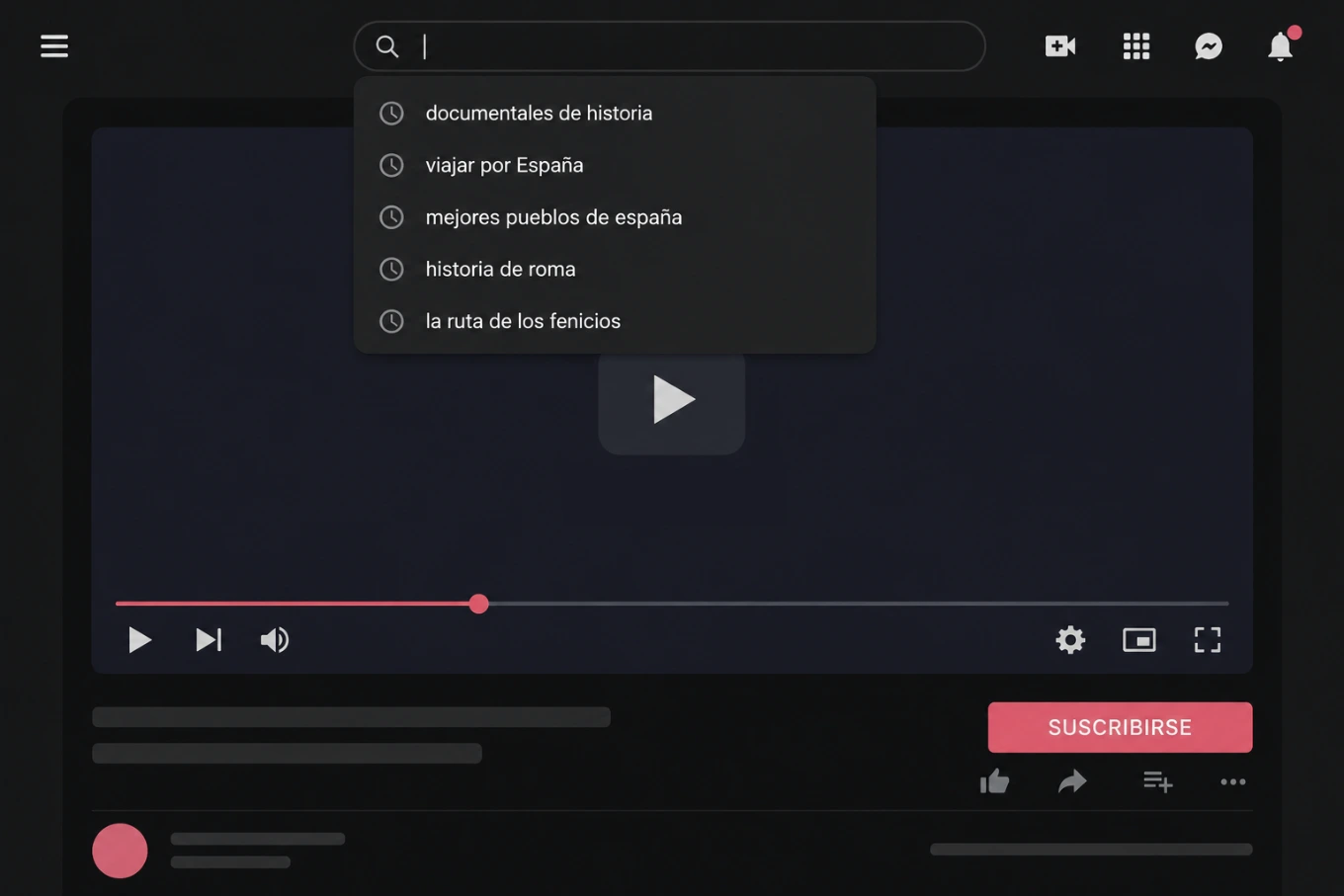
Search YouTube in Spanish, not English. Instead of searching for history documentaries, search for documentales de historia. Instead of travel vlog Spain, search for viajar por España. The algorithm quickly learns what you're interested in and starts recommending native Spanish channels, making it much easier to discover content you'll actually enjoy watching.
Not there yet? If native content still feels overwhelming, Modo's listening exercises can help bridge the gap. They use short audio clips from native speakers so you can build confidence one sentence at a time before moving on to longer videos and podcasts. The goal is to get you comfortable with real Spanish as quickly as possible.
Watching a show? Use Spanish subtitles, not English. Seeing and hearing a word together makes it much easier to catch next time.
2. Train what you've already learned
This is where Modo fits in.
We built Modo because this was exactly the problem we ran into ourselves. Instead of teaching endless new grammar, it helps you practice the grammar and vocabulary you already understand until using it becomes automatic.
Think of it as training, not teaching. Here's what one exercise actually looks like: a single structure, drilled in context, with the reason shown right there.
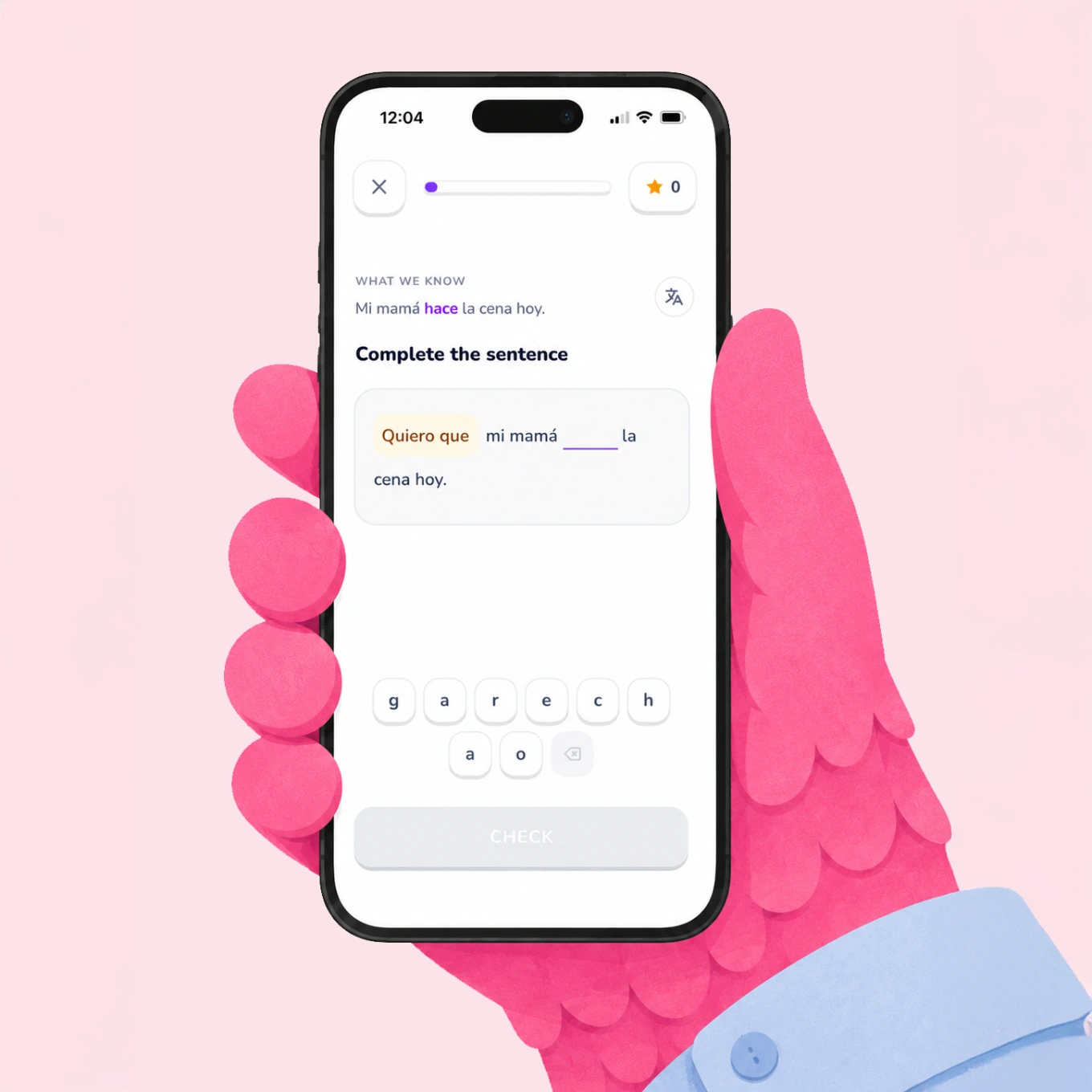
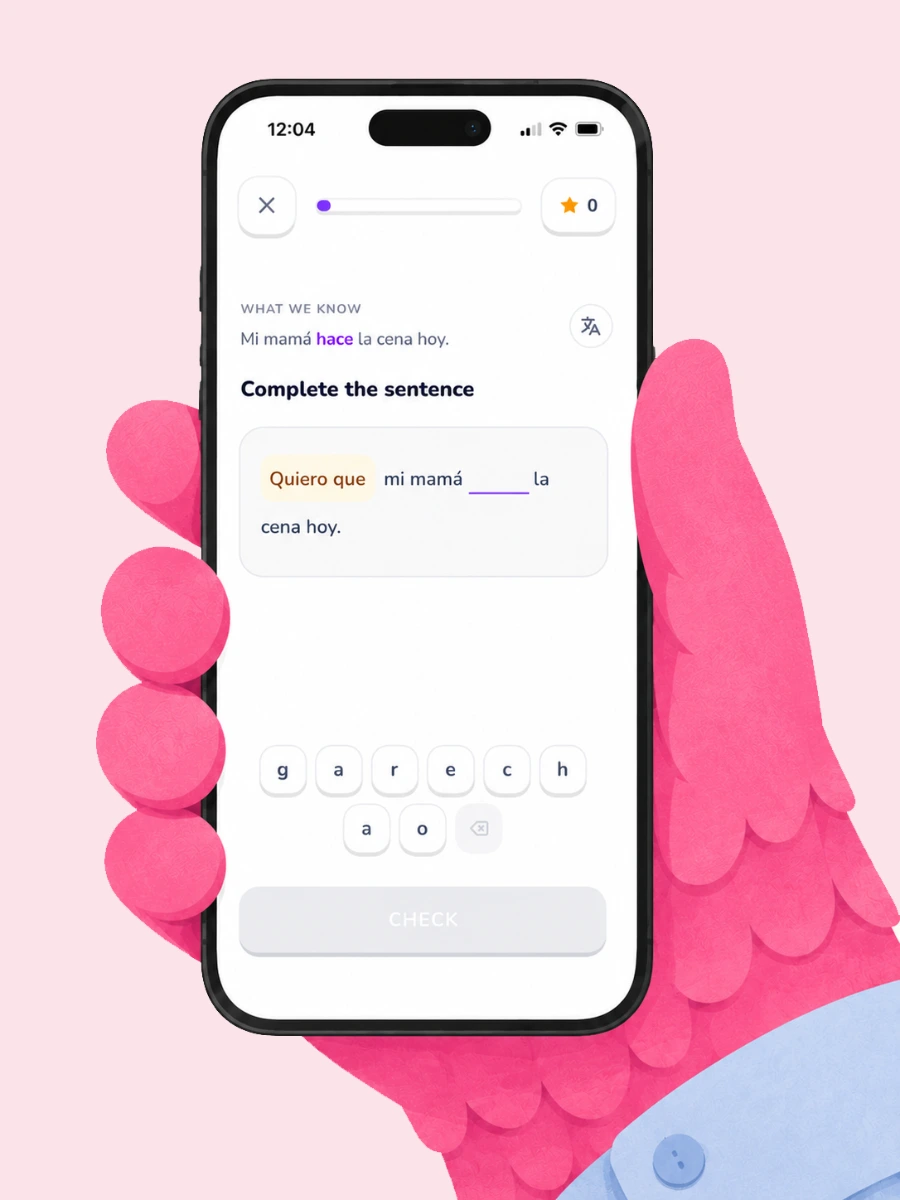
Do a dozen of these on one topic and the pattern becomes instinct.
3. Rinse and repeat
You don't need three hours a day. Thirty to sixty minutes is enough if you're consistent.
By this stage, progress is measured differently. The goal is no longer to know more Spanish. It's to make the Spanish you already know automatic.
Don't stall on one hard sentence. Replay it once or twice, get the gist, and move on. The same patterns come back, and each time they feel a little more familiar.